
World-class interdisciplinary research on migration in Africa.
The African Centre for Migration & Society (ACMS) is the continent’s leading scholarly institution for research and teaching on human migration and displacement, dedicated to shaping global discourse on mobility and social transformation.
Based at the University of the Witwatersrand in Johannesburg (South Africa), ACMS is an independent and interdisciplinary research centre with three key areas of work: research, postgraduate teaching, and outreach. We aim to influence global and regional academic research agendas, policy deliberations and civil society mobilisation.
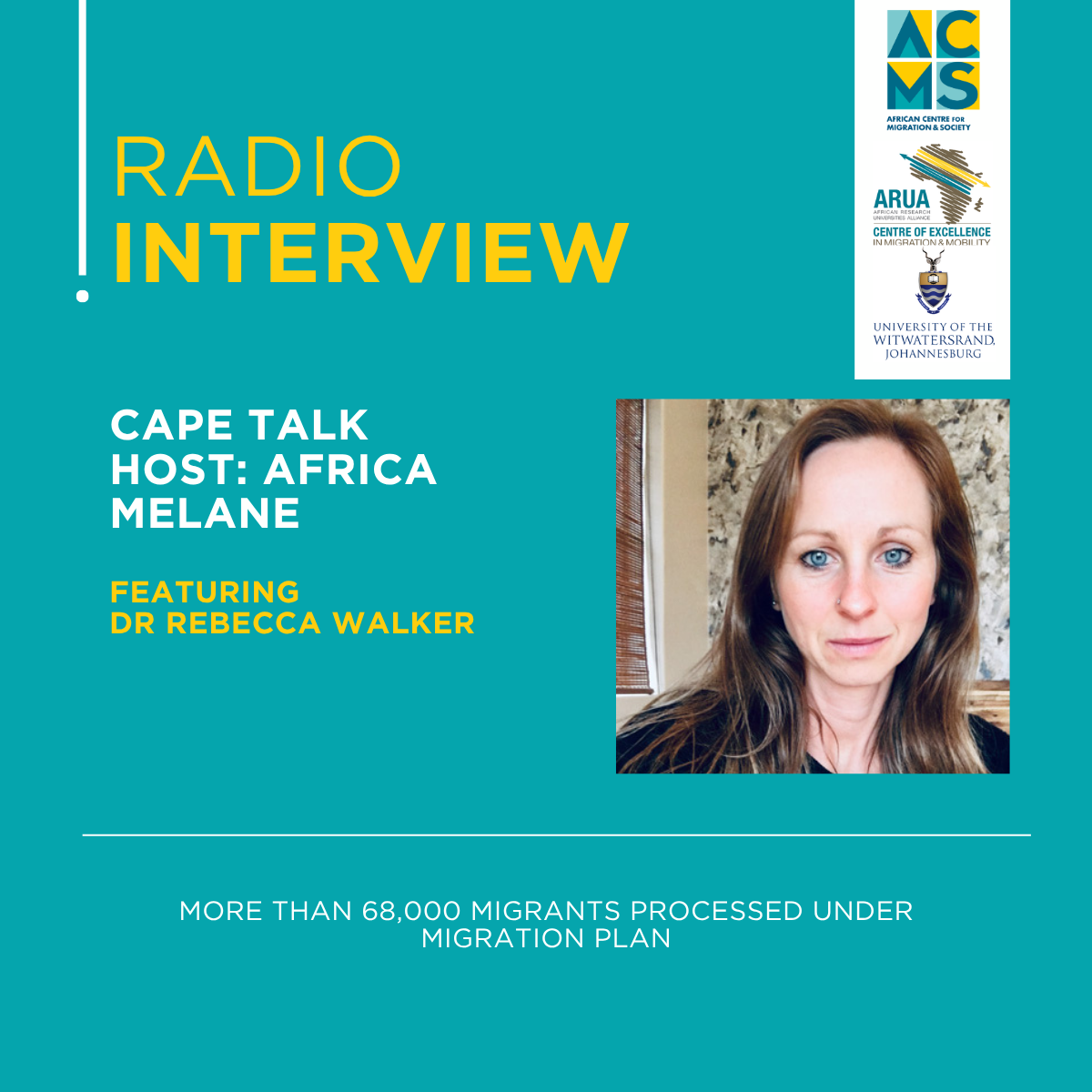
More than 68,000 migrants processed under migration plan
Dr Rebecca Walker joined Cape Talk’s Africa Melane to discuss the government’s latest update on its Five-Point Plan on Migration Management.
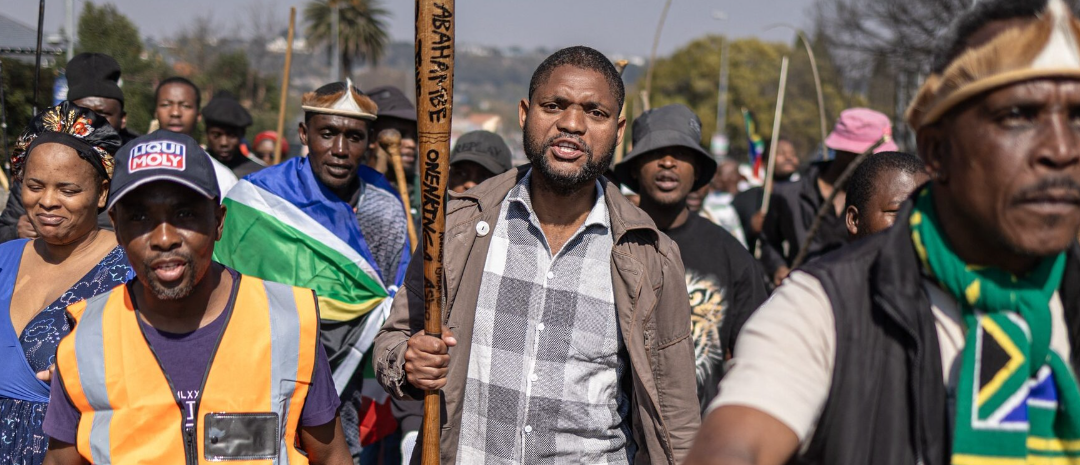
South Africa’s Anti-Immigrant Unrest Tests Its Pan-African Standing
“My greatest takeaway from the marches is that they are less about immigration and more about the nature of South African politics, and…
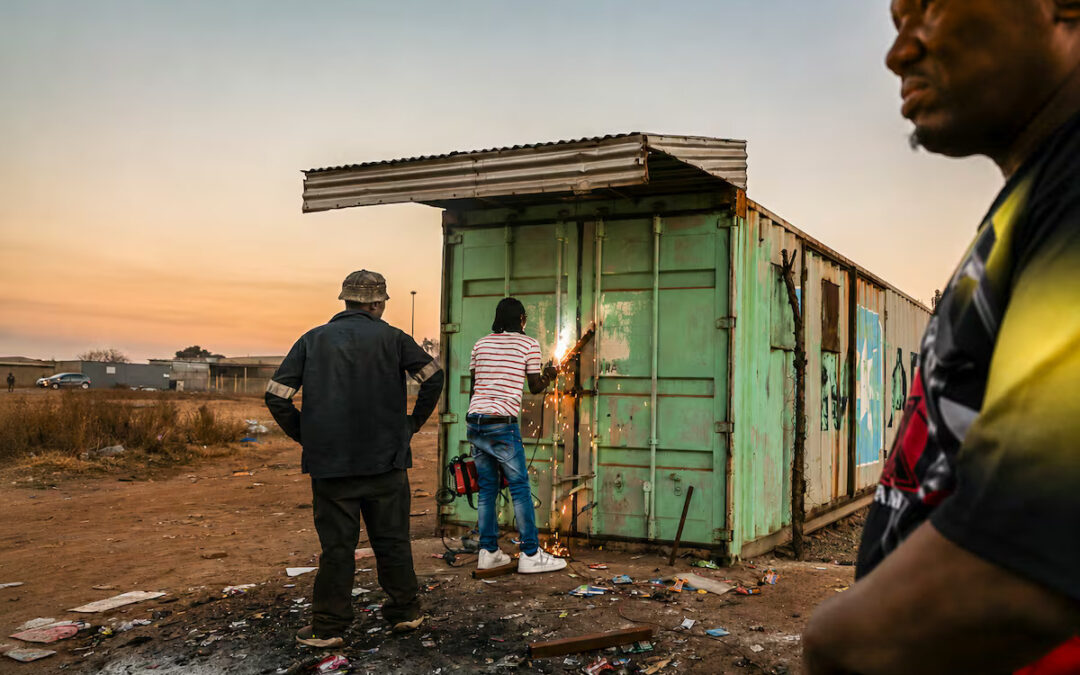
From being unemployed to hunting migrants in South Africa: The movement that has turned foreigners into scapegoats
A xenophobic wave, emerging in townships and working-class neighborhoods, has placed immigration at the center of political debate…
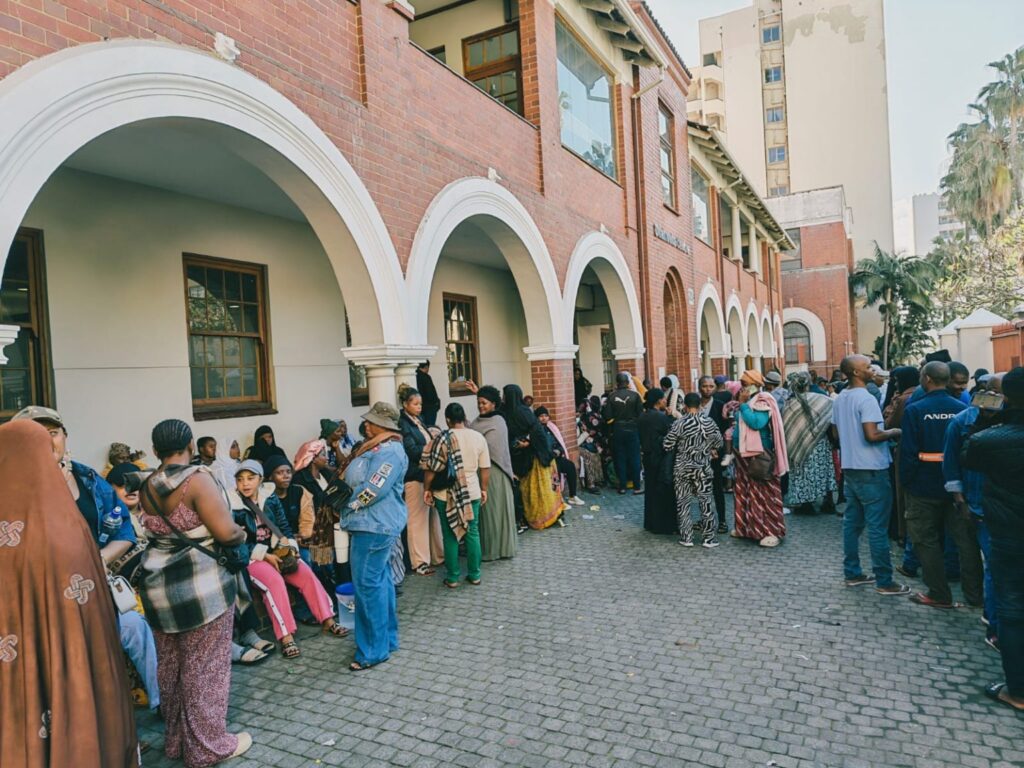
The hidden violence behind the ‘peaceful’ anti-migrant protests
“How societies name and frame events shapes collective memory and future accountability. If events surrounding the 30 June protests are…
Experts Sound Alarm Over Hidden Human Cost of Repatriation
Dr. Rebecca Walker (Research Associate, African Centre for Migration & Society) shares insights on SalaaMedia: “Repatriation implies…

What’s behind SA’s latest wave of xenophobia?
Prof Loren Landau: “There has been a race to the bottom among all of the parties, where everyone is trying to show that they are strong, or stronger, on immigration.”
188 students
have completed courses with ACMS since 2004
23
PhD
132
Masters
33
Honours
Study
ACMS offers Bachelor of Arts (BA) with Honours, Masters and PhD degrees in Migration and Displacement.
| HONOURS | BA Honours in Migration and Displacement |
|---|---|
| MASTERS | MA in Migration and Displacement |
| PHD | Doctoral research in Migration and Displacement |
Research
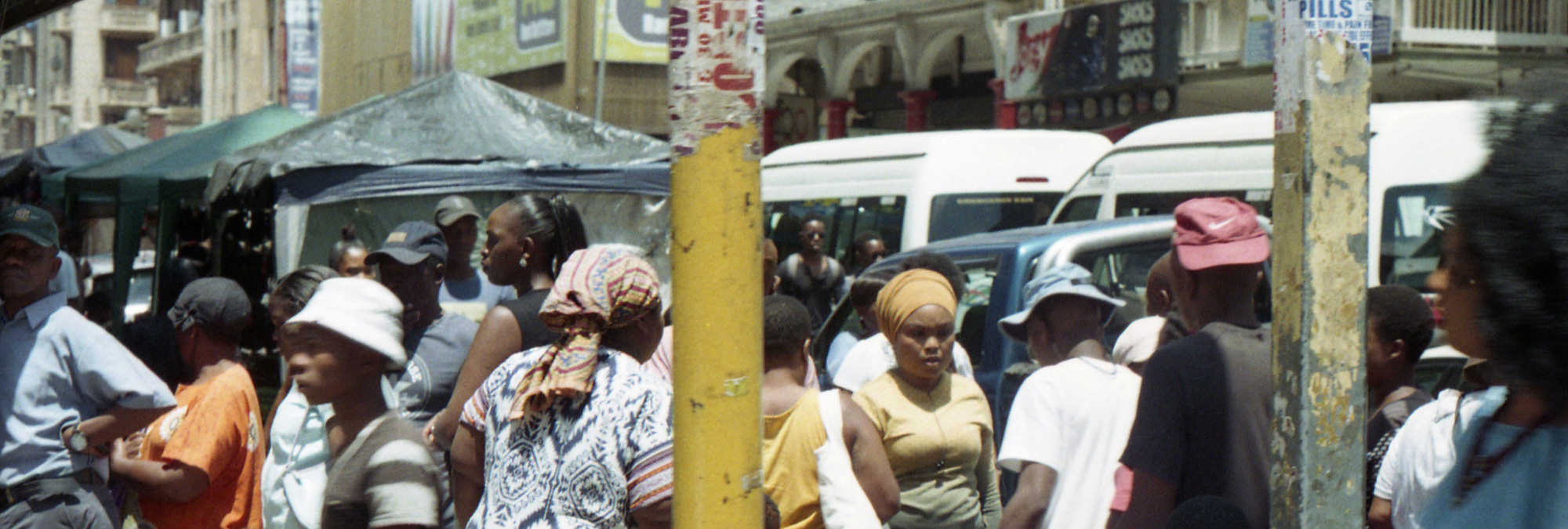
Research undertaken and published by the African Centre for Migration and Society is interdisciplinary in nature, but falls largely into three main thematics.

Moral B/orders & the Politics of Belonging
Read more →
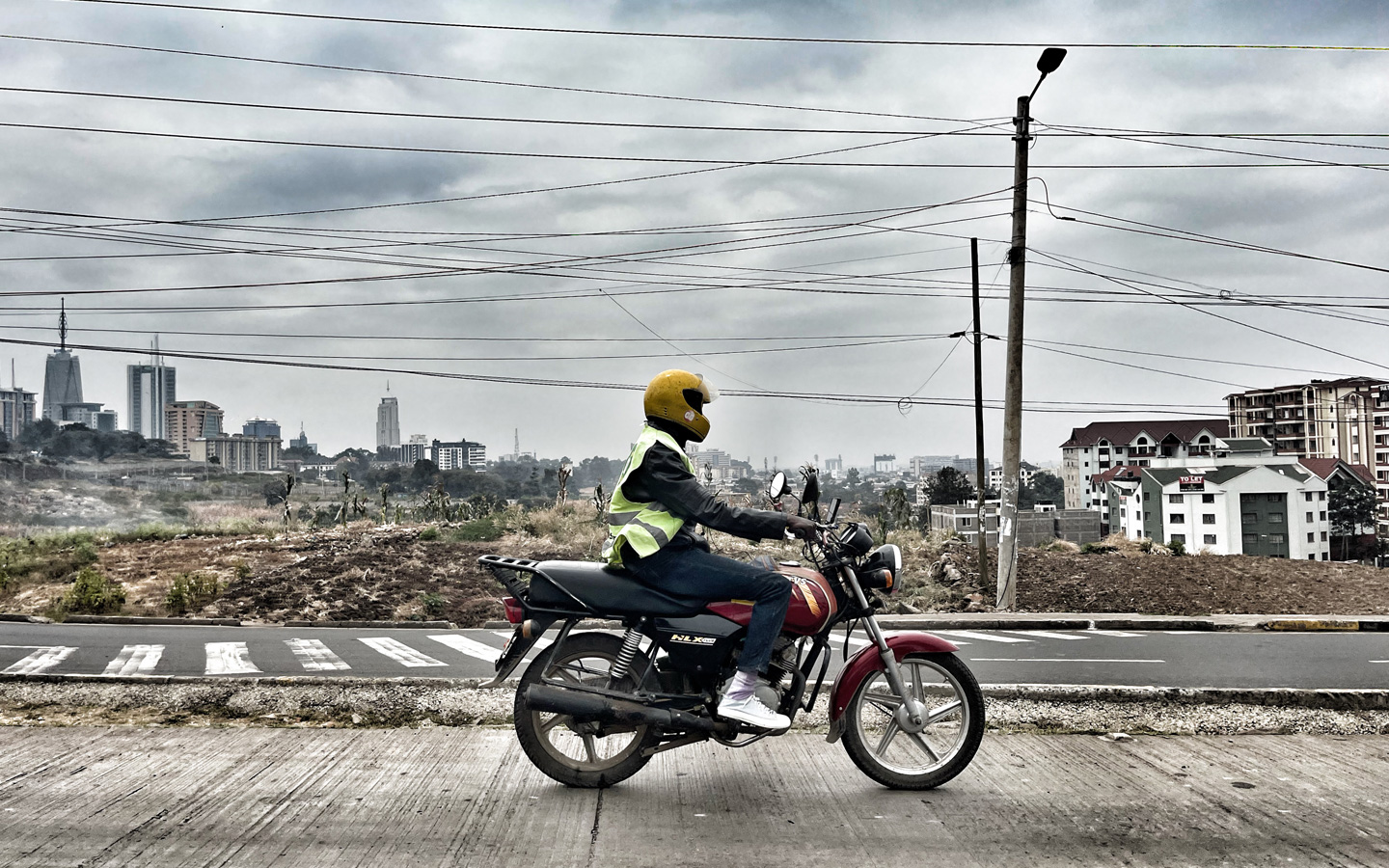
Socio-Spatial Transformations
Read more →

Mobilities, Health & Wellbeing
Read more →
Research-Linked Projects
Different areas of our research are linked to specific projects — some of which have grown into established entities of their own.
Launched by ACMS in 2016, Xenowatch is an open-source platform for collecting, visualizing, and interactively mapping information and data on xenophobic discrimination in South Africa. It allows crowdsourcing of information through email, WhatsApp, and phone calls. Xenowatch tracks, verifies, and analyses all incidents of xenophobic discrimination, along with responses from government and civil society.
Serving as an early warning system, it alerts stakeholders to threats, violence, and other forms of discrimination, and calls for timely and appropriate intervention. Its data analysis identifies causal factors and community risk profiles, supporting more effective prevention and conflict resolution strategies.
Visit website
Research project that aims to investigate the viability of movement building for migrant rights in the South African context, characterised by growing xenophobic populism and discrimination, as well as push-back by an active, albeit fragmented civil society ecosystem.
The project seeks to define strategic and proactive advocacy for migrant rights, identify engagement strategies with various partners, and support the migrant sector in crafting new narratives and long-term strategies to shift policy perspectives, for a more effective protection of migrants rights in the country.
Visit website
The Mobility Governance Lab (MGL) explores the governance of mobility at multiple scales across the global south. It is an autonomous, critical space working to realise principles of innovation, independence, and equitable partnership. Through collaborative research, it offers original insight and perspectives to scholars, civil society, and practitioners while fostering the next generation of engaged researchers from Africa and beyond.
Initially conceived around human mobility as a heuristic providing insights into practical workings and transformations of regulatory and governance systems.
Visit website
The Atlas of Uncertainty is a publication, an exhibit, and a digital platform. It integrates written essays, visual art, statistics, sound, and critical cartography. Created dialogically, it offers layered and nuanced understandings of transforming urban spaces and the moral and material economies that bind them. It is at once a tool of knowledge communication and a reflection on what we believe and how we know it.
The Atlas aims to move from the “census” to the “senses”, evoking sensorial and embodied experiences of the material, in ways that challenge traditional ways of representing African cities.
Visit website
Africa’s social diversity is being reshaped by the mobility of those within it. Their movements and interactions are generating novel social and political configurations that give cause to reconsider the spatial, ethical, and conceptual foundations of social and political theory. These include definitions and responses to the ‘other’; the spatial bases of political community; and how mobility and translocal connections are positioning African cities and Africans within global circulation of values and power.
The initiatives conducted by Chair affiliates and students are radically interdisciplinary and destabilising, in ways that provide insights into underexplored processes with acute theoretical and practical significance. These inquiries work across sub-Saharan Africa and in partnership with scholars on four continents.
Website coming soon
The CoRE in Migration & Health will address the key scientific challenge of identifying and developing solutions, relevant to the social, cultural and political contexts, to address the root causes of poor health among migrants to enhance the positive health outcomes of migration across one of the largest migration corridors globally, the African Union (AU) – European Union (EU) corridor.
The CoRE is co-led by Jo Vearey (ACMS & the ARUA Centre of Excellence in Migration & Mobility, Wits University) and Soorej Jose Puthoopparambil (Uppsala University). It involves multiple partners and is supported by the African Research Universities Alliance (ARUA) and The Guild of Research-Intensive European Universities.
Visit website
The African LGBTQI Migration Research Network (ALMN) aims to advance scholarship on LGBTQI+ migration on, from and to the African continent, bringing together scholars, researchers, practitioners, activists and service providers to spark critical conversations, promote knowledge exchange, support evidence-based policy responses, and initiate effective and ethical collaborations.
ALMN recognises that LGBTQI+ migration does not simply happen from the African continent, but also within and across (imposed) national borders. We are committed to both reorienting LGBTQI+ migration scholarship towards the Global South, and promoting knowledge produced within the Global South in order to challenge systemic inequality within the global academy.
Visit website
GEMMS is an NIHR-funded Global Health Research Group involving collaboration between ACMS, the University of Essex, the Tata Institute for Health Sciences (TISS) in India, Africa University in Zimbabwe and Health Poverty Action (HPA). The link between Gendered Violence (GV) and poor Mental and psychosocial Health (MH) is widely acknowledged, yet poorly understood.
The GEMMS research group brings together academics with a range of relevant GV and MH expertise and practitioners who provide on-going support to migrants, to establish a programme of work that generates new knowledge and improved understandings, and co-designs evidence-informed training interventions and public health solutions.
Visit website
In Southern Africa, mobile adolescents and young people (mAYP) represent a substantial portion of the migrating population. Migration often restricts their access to health services, particularly sexual and reproductive health (SRH) information and quality care, contributing to poor sexual health outcomes.
Nurture4Youth is an NIHR-funded Global Health Research Group involving collaboration between ACMS, the London School of Hygiene & Tropical Medicine (LSHTM), the Africa Health Research Initiative (AHRI) and Zambart. Our goal is to build and strengthen a dynamic research partnership focused on producing policy-relevant insights that support mobile adolescents and young people.
Visit website